
Northwest Outdoor Report

Sol Duc Picking Up for Springers
Bill Myer from Anglers Guide Service in Forks says he’s been hooking a few nice spring Chinook on the Sol Duc river every day and the fishing appears to be picking up. Myer said most of his springers have been in the 8 to 14 pound range, but he’s heard of quite a few spring Chinook over 20 pounds already. He’s been backtrolling cured eggs and cut plug herring to get his bites on the Sol Duc. The Sol Duc springer fishery will continue to produce fish well into the month of June.

Trout Fishing Still Great Despite High Flows on Upper Columbia
Jack Mitchell from the Evening Hatch Guide Service checked in from Black Bear Lodge on the upper Columbia River to say that the trout fishing has remained great despite really high flows the past couple of weeks. The upper Columbia has swelled from 85,000 cfs to over 175,000 cfs recently from snow melt in the upper part of the basin. Mitchell says the fishing has remained great right thru the uptick in flows. He said they’re catching trout over 20 inches on a daily basis on anything from carpenter ant patterns to caddis, baetis, mayflies, and pmd’s. Mitchell says the great fishing will continue thru the month of June when the Green Drake hatch takes off.

Hein Bank Comes to Life on Second Halibut Opener
Kevin John from Holiday Sports in Burlington reported excellent halibut fishing on Hein Bank on the second halibut opener on Thursday of this past week. Kevin and the gang from Holiday Sports had their limit of halibut between 25 and 45 pounds before noon on Thursday. They caught their fish on the south end of Hein Bank in 120 to 180 feet of water. He said the hot baits were squid with a big glow in the dark hoochie and a large squid with a whole herring stuffed inside of it. Anglers should have decent weather on the Strait of Juan de Fuca for today’s halibut opener until the wind kicks up later this afternoon.

Last Razor Dig of the Season
Clam diggers will get one more chance to dig razor clams at Twin Harbors beach near Westport next Friday thru Sunday. Twin Harbors will be the only beach open for digging. WDFW coastal shellfish manager Dan Ayres says this has been the most productive clam digging season in over 20 years on the Washington Coast. Since last October diggers have harvested more than 5 million razor clams. The coast will close after this last clam dig to allow the razor clams to spawn and provide another crop of clams for digging next fall.

Kids Fishing Event on Heart Lake
One of the hottest trout fishing lakes in the region, Heart Lake near Anacortes, will close over the upcoming Memorial Day weekend for a kids fishing event. The event takes place on June 1st and the lake is closed two days prior to allow freshly stocked trout to acclimate. Kids that otherwise might not get a chance to catch a trout get the entire lake to themselves on June 1st. The Kids Fishing event has been held for 20 years on Heart Lake and is sponsored by the City of Anacortes and the Fidalgo/San Juan chapter of the Puget Sound Anglers.

First Copper River Salmon Arrives in Seattle
Alaska Airlines pilots carried a 40 pound Copper River king salmon to waiting chefs at Sea-Tac Airport yesterday. It was the first Copper River king to arrive in Seattle and marks the beginning of the yearly craze for this great eating strain of king salmon. Copper River king salmon are prized for their high fat content and restaurants pay as much as $50 a pound to purchase them for their patrons. The Alaska Airlines Boeing 737 contained an additional 24,600 pounds of Copper River king salmon and Alaska Airlines said it would run three more Copper River salmon flights like it on Friday.

Minnesota Lakes Test Positive for Cocaine
Associated Press – Scientists just studied 50 lakes in Minnesota for water quality and found a myriad of manmade chemicals in the lakes – including cocaine, DEET, synthetic estrogen, antibiotics, and antidepressants. The bug repellent DEET was found in 76 percent of the lakes and researchers were shocked to find that 32 percent of the lakes tested positive for cocaine. Cocaine was the third most common chemical found in the lakes and scientists were surprised to find it in some very remote lakes that weren’t close to population centers. Before you head to Minnesota and start snorting lake water understand that you’ll probably drown before you catch a buzz. Scientists say the levels of cocaine in the lakes that tested positive is around several parts per trillion…hardly enough to catch a buzz.

Rob Endsley
The Outdoor Line
710 ESPN Seattle

KIRO’s Upshaw to Join the Outdoor Line on Saturday

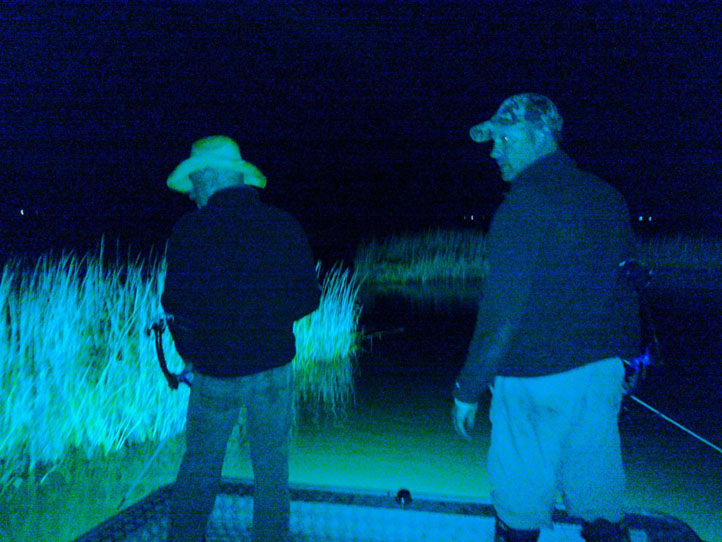
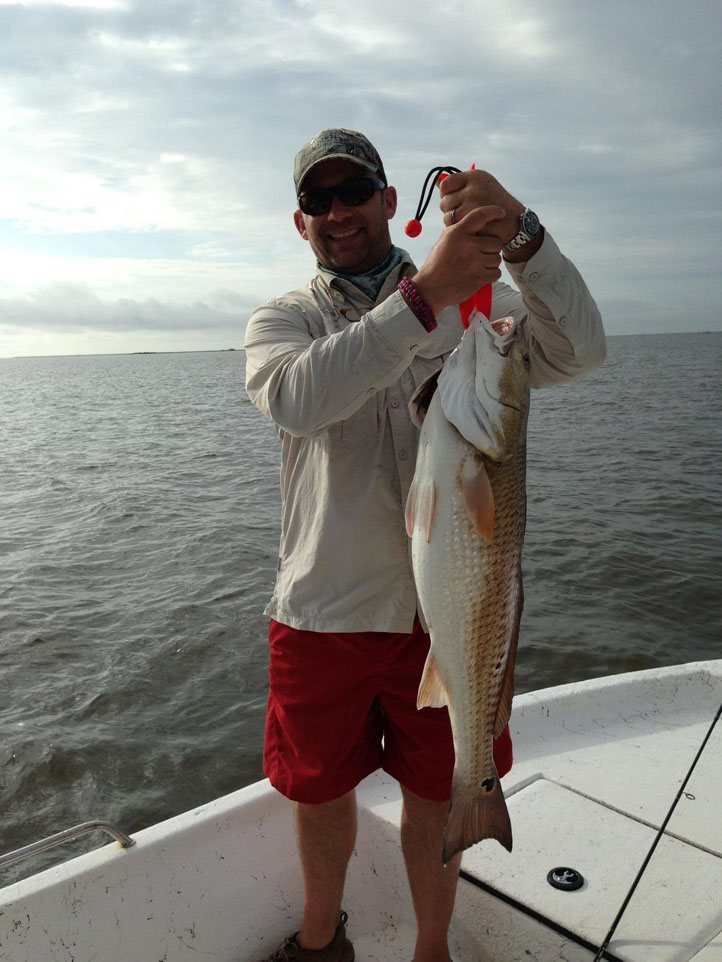
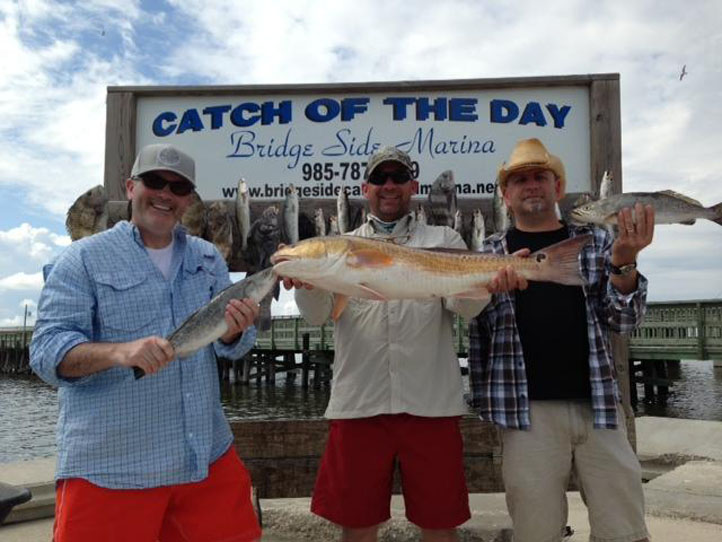
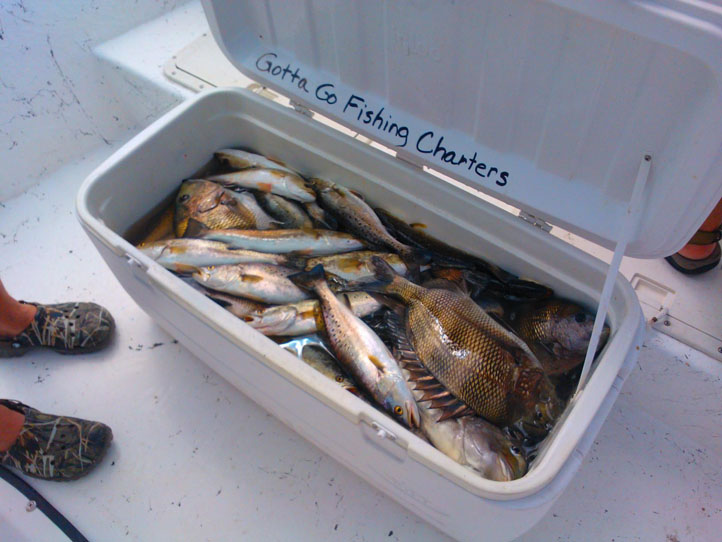
We’ll have Ron Upshaw from KIRO’s popular “Ron and Don” show on the Outdoor Line tomorrow morning to chat with us about his recent fishing trip to Louisiana. Ron fished the flats for redfish, black drum, and seatrout by day and then bow-fished for redfish by night. That’s a FULL day of fishing right there!

Ron says, “It was super fun but I started running out of gas at around 1:30 in the morning.”

Bow fishing for redfish sounds like blast!

Here’s a few of the photos from Ron’s trip and he’ll be giving us the fully skinny on his fishing trip on the radio with us in the morning.
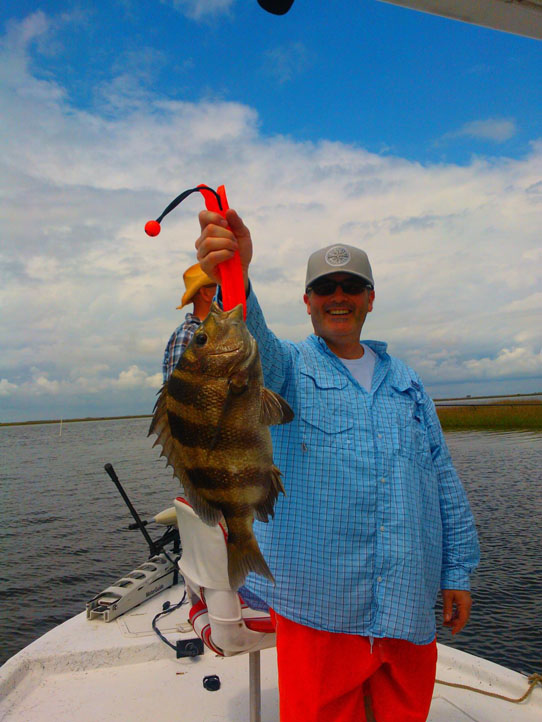
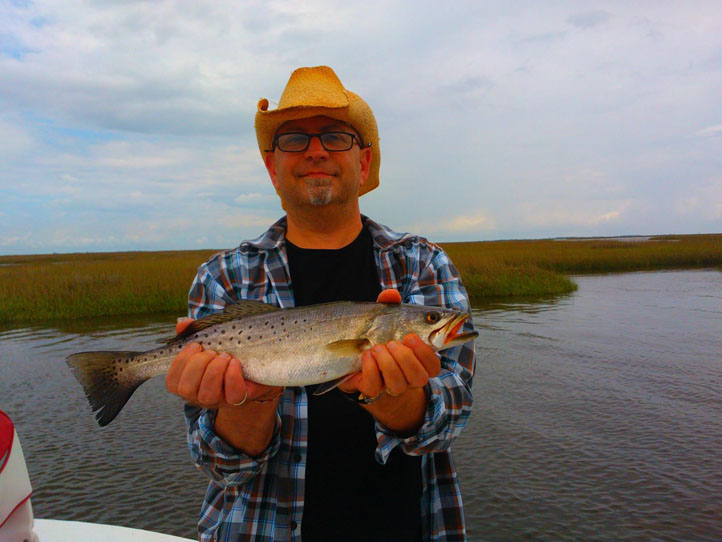
A Louisiana fishing trip has always been on my bucket list, so I’m anxious to hear what he has to say about he recent adventure on the show tomorrow. Plus, Nelly will get to learn about something other than his beloved salmon. Blackened redfish…it’s what’s for dinner Nelly!

Rob Endsley
The Outdoor Line
710 ESPN Seattle


Luhr Jensen Releases New Flasher Colors for 2013

I just got my grubby little hands on the new Coyote flashers that Luhr Jensen just released for the upcoming 2013 salmon season and they look pretty schnazzy.

I hate to admit it but I’ve kind of grown fond of trolling for Chinook in Southeast Alaska and none of these flashers will be spared in our pursuit of chrome in the early part of the upcoming charter season. These flashers will be beaten in sand, gravel, and rock and thrashed by lingcod, halibut, and salmon. There isn’t a better place on earth to test out new tackle than Southeast Alaska!

Without further ado here’s the new flasher colors from Luhr Jensen:

Black/Double Crush Glow

Frog Racer

Glow/Double UV

White/Blue Bubble and Crush Glow

White/Chartreuse Dew and Crush Glow

If I had to choose three of the new colors when we start fishing in Southeast Alaska in early June I’d probably pick Glow/Double UV, Blue Bubble Boy, and Chartreuse Mountain Dew. Might as well start giving them nicknames right now!

Rob Endsley
The Outdoor Line
710 ESPN Seattle


Northwest Outdoor Report

300,000 Anglers Expected for Trout Opener
If you’ve noticed a few more boats scurrying around Western Washington early this morning it’s because today is the lowland lake opener in Washington. With over 300,000 anglers hitting the water today it’s the single largest opener in Washington. WDFW responded to requests to plant bigger fish this year by increasing the size of the stocked trout from around 8 to 9 inches to 11 to 12 inches. They planted approximately 2.4 million of these bigger, thicker, and chunkier trout for the opener. In addition, they also planted 110,000 jumbo rainbows averaging between 13 and 16 inches and another 52,000 triploid trout averaging around one and a half pounds. Temperatures are expected to reach around 60 degrees over the weekend and outside of a few afternoon showers the forecast is excellent for the biggest fishing opener of the year.

Martinis’s Top Lake Picks on the North End
John Martinis at John’s Sporting Goods in Everett likes Lake Kye in Snohomish County, Martha Lake near Alderwood, and both Heart and Erie Lakes near Anacortes for the trout opener. Martinis says the state plants a lot of fish in all of those lakes and they produce excellent fishing every year. His go-to setup for catching a limit of stocker trout is orange Berkley Power Eggs fished on a long 3 to 6 feet leader of 4 pound test monofilament. He says the extra long leader allows the bait to float up off the bottom above the weeds where the trout are cruising.

Pollock’s Top Lake Picks on the South End
Tom Pollock at Sportco in Fife says his top pick in the Tacoma area would be Lake Spanaway which recently received a plant of over 18,000 trout. He also likes Mineral Lake, Wilderness Lake, and Bay Lake on the Key Peninsula for great opening weekend fishing. Bay Lake recently received a plant of over 7,500 rainbows in preparation for the opener.  Pollock says the fish are usually in the top three to five feet of the water column and he’ll target those shallow fish by trolling Wedding Ring spinners, Dick Nite spoons, or small Flatfish. Pollock says another fun way to catch opening day trout is to fish a small piece of cocktail shrimp on a #6 hook below a bobber. He calls it a “delicacy” for these stocked trout and says the holdover trout will also hit this bait, as well.

Dam Counts Reach 1,000 Springers  on the Columbia This Week
1,000 springers passed over Bonneville Dam on Tuesday of this past week. It’s the first time over 1,000 spring Chinook have passed over the dam all season and it seemed to encourage more springers to charge upriver. 2227 passed over the dam on Wednesday and 2541 went over Bonneville on Thursday. Reports from Drano Lake and the Wind River upstream of Bonneville are that a few springers are being caught already. These areas typically fish best for spring Chinook during the month of May. We’ll have more reports from both of these areas in the coming weeks.

Saltwater Openers up Next
Saltwater anglers are eagerly awaiting the May 1st ling cod opener in the Puget Sound. The ling opener is followed by the spot prawn opener on May 4th and a slew of areas open up for halibut the first week of May also. Recreational shrimpers will see a 70% increase in shrimp quota this year which means anywhere from an extra day or two of shrimping in some areas to an extra month of shrimping in the San Juan Islands. Anglers are urged to visit the Washington Department of Fish and Wildlife website for a full run down of the upcoming ling cod, shrimp, and halibut seasons.

Fly Fishing Fair in Ellensburg
Don’t miss the 7th Annual Fly Fishing Fair at the Ellensburg Fairgrounds on May 3rd and 4th. Over 100 fly tiers will be on hand to share their fly tying skills and there will be numerous fly casting instructors at the fair all weekend to teach both beginning and expert fly casting techniques. The Fair boasts 18 flyfishing workshops over two days featuring names like Jack Mitchell from the Evening Hatch Guide Service, Steve Worley from Worley Bugger Flies, and Jim Teeny of Teeny Fly Lines.  For more information about the Fly Fishing Fair log onto Washingtoncouncilfff.org.

Yosemite Ranks Highest for Drug Busts
Associated Press – California’s Yosemite National Park lead the way in drug busts amongst all the national parks for the last three years. Park Rangers at Yosemite arrested 2,393 people for illegal drugs over the last three years compared to just 500 at Yellowstone and 365 at Grand Canyon National Park. One park visitor said they see a lot more happy faces at Yosemite than they do at Disneyland. The drug problem has been a boone to local mini-marts, however, who can’t seem to keep Dorito’s and frozen pizza’s in stock.

Rob Endsley
The Outdoor Line
710 ESPN Seattle
Washington Fishing Forums and Reports

Northwest Outdoor Report

Sea Run Cutties Smashing Chum Fry on South Sound Beaches
Anil Sravastava at Puget Sound Fly Company in Tacoma says it’s the best spring searun cutthroat fishing he’s seen in at least a half a dozen years in the south Puget Sound. Anil says the searun cutties are keying in on chum salmon fry dumping out of the creeks in the south sound and really anywhere south of the Narrows has been fishing good. He pointed to both Carr Inlet and Colvos Passage as areas to hit, however, and he recommends fishing small baitfish patterns in the one and a half to two inch range that mimic the chum fry for the best results.

Alger Likes Cottage and Margaret Lakes on Trout Opener
Kent Alger at Three Rivers Marine in Woodinville gave a nod towards Cottage Lake and Lake Margaret near Woodinville as his top picks for trout on the opener next Saturday. Kent’s favorite setup is a white micro jig under a pencil float and he says to run 4 pound test leader to get more bites. He says to set the float anywhere from 3 to as much as ten feet deep and twitch the jig occasionally to give it some action. Alger says the large holdover trout are particularly fond of this setup and expect freshly stocked trout to hit the jigs too. Three Rivers Marine will be opening the store at 6:00 a.m. for the opener next Saturday and they are offering 20% off on all of their trout gear including Daiwa D Shock and D Turbo trout combos.

Bill’s Boathouse to Release 6,000 Trout
If you’re looking to get a jump on opening day of trout season Bill’s Boathouse on American Lake will be releasing six thousand rainbow trout today. The trout all weigh nearly one pound and they will be released at 8:00 a.m. today. Mike Barr at Bill’s Boathouse says the fishing is outstanding off the dock at the boathouse this weekend and for several more weeks to come. Bill’s Boathouse is located near the community of Tillicum in Tacoma and they have a private fishing dock that costs between $3 and $5 per day to fish off of.

Razor Clam Dig Approved for Washington Coast
WDFW shellfish managers just approved a morning razor clam dig that will run April 24th thru the 30th at Twin Harbors beach. Two beaches, Long Beach and Mocrocks, will be open to morning digging for four days and Copalis will be open for three of the seven days. Full details of the beach openings for this razor clam dig are posted on the WDFW website.

Spring Days at Defiance Marine
April 27th is the Defiance Marine annual Spring Event featuring halibut and albacore seminars with familiar names like Todd Schwartz, Tommy Donlin, and Rob Endsley. Rob Endsley will be on hand in the afternoon to demonstrate rigging techniques for fishing both cut plug and whole herring. Defiance will have tackle on sale and a free hamburger and hot dog barbecue for lunch. There’s also a fishing gear swap meet at the event, so bring your old fishing gear and unload it at Defiance Marine on April 27th.

Wolf Attacks Deer on the Edge of Wenatchee City Limits
Northwest Sportsman – Wolves are making their presence known near Wenatchee, as a wolf took down a wounded deer just a mile out of town near the Wenatchee Rifle and Revolver Club earlier this week. The wolf was attacking a wounded deer near a residence in the Number 2 Canyon when the homeowner called authorities to let them know what was going on. While the sight might have been somewhat shocking, authorities say the wolf was just doing “what wolves do” by removing a sick or wounded animal from the herd. Wolves have been seen in the same general area on two elk kills in the last month. The wolves have been hunting deer and elk that are on their winter range in the lowlands, which also happens to be where the most houses are located.

Hybrid Rattlesnake Seized from Olympia Apartment
Thurston County animal control officers seized an illegal hybrid diamondback rattlesnake from an apartment in Olympia last Sunday. The hybrid rattler was a cross between a diamondback rattlesnake and some other kind of pit viper. A neighbor tipped off authorities that the man had the snake after he told the neighbor that he had been bitten by one of his other pet rattlesnakes years earlier and had to be airlifted to Harborview. The shelter that was holding the snake said it was repeated snapping it’s head in its glass cage and squirting vemon from its teeth. It was not a happy snake. The man faces a fine of up to $2,000 for harboring a dangerous wild animal.

Rob Endsley
The Outdoor Line
710 ESPN Seattle
www.theoutdoorline.com

Northwest Outdoor Report

Lake Chelan Still Tops for Kokanee
Mike Campbell from Lowrance Electronics lives in Chelan and says the kokanee fishing on Lake Chelan is the best he’s seen in over 30 years. He described the fishing as “wide open” on the lake right now. Campbell says the kokanee are averaging  between 16 and 18 inches and  he recommends using a Luhr Jensen Triple “000” dodger and a Kokanee Killer tipped with shoepeg corn to catch them. He says the best fishing has been occurring in 60 to 105 feet of water around Rocky Point and Minneapolis Beach. Campbell says that once you find a school on your electronics it’s important to stay on them.

Smallies Hanging Deep in Lake Stevens
Greg Rockenback at Greg’s Custom Rods in Lake Stevens says there’s been some nice smallmouth being caught on the lake in 30 to 40 feet of water. Greg recommended using football head jigs in any pattern that resembles a crawfish. Lake Stevens holds more smallmouth bass than largemouth’s and Rockenback says the smallies will go up to 6 pounds in the lake. He says the water temperature is about 45 degrees right now and he’s hoping with the warm weather it will jump start the kokanee bite soon.

Washington Halibut Seasons Announced
The halibut season in Puget Sound will be shortened a bit this year to compensate for exceeding last year’s quota. This year’s halibut season was reduced by five days in the eastern strait and nine days in Marine 5 because of last year’s quota over-run. The southern Washington coast will see a slight increase in its halibut season. Managers have moved the fishing days from Thursday thru Saturday to Friday thru Sunday to accommodate an extra weekend day to allow more anglers to harvest halibut. For more on the upcoming halibut season in Washington be sure to check out the Washington Department of Fish and Wildlife website.

Wenatchee Wolf Pack Confirmed
After being wiped out as a breeding population in Washington in the 1930s wolves have been making a comeback here in Washington State recently. Since 2008 wolf packs have established themselves in Okanogan, Pend Oreille, Kittitas, Stevens, and now Chelan County. The Chelan County pack was confirmed recently by trail cam photos sent from a resident in Pitcher Canyon just south of Wenatchee of two wolves feeding on a dead bull elk. State biologists say that wolves are rarely a threat to humans but they have been known to attack pets, especially dogs.

Springers Still Slow on the Columbia
Only 13 percent of the springer quota had been caught on the Columbia River through last Sunday. The season is set to close on April 6th, but officials are meeting on Wednesday to review the run to date and decide whether a season extension is warranted. Many think an extension of the springer season will occur on the Columbia. The season is scheduled to end on the lower river April 5, but with such a small percentage of the quota having been caught by anglers it’s likely that the season will be extended. Oregon officials are meeting on Wednesday to decide whether a season extension is warranted. The annual NSIA derby is on the river today, which will be a good gauge of how the fishing is.

Walleye Limit Increased
WDFW just increased the walleye limit on Lake Roosevelt, the San Poil River, and the lower Spokane River to 16 walleye per day with no size restriction. Officials are trying to control the population of walleye to reduce predation on native species and produce more quality walleye for future fishing opportunities.

Kokanee Seminar at Three Rivers Marine April 10th
Don’t miss the free Kokanee Seminar on April 10th at Three Rivers Marine in Woodinville. Capt. Ryan Bigley’s seminar will kick off at 7:00 p.m. and mini-clinics start at 6:00 p.m.. Kokanee are just starting to bite in our local lakes and now is the time to learn where, when, and how to catch these great eating fish. Three Rivers Marine will have free hot dogs and pop as well as a ton of raffle prizes including a Jared Johnson edition Lamiglas kokanee rod to give away. Get ahold of Kent Alger at Three Rivers Marine in Woodinville for more details.

Renew Licenses for 2013
The Washington Department of Fish and Wildlife would like to remind fishers and hunters that licenses are good thru Sunday, March 31st. Fishing licenses, hunting licenses, and Discovery passes will all need to be renewed on April 1st for the coming year. License fees will remain the same across the board for 2013.

Man Arrested for Shooting a Deer in a Walmart Parking Lot
Indiana Gazette, Pennsylvania – At the Resort Plaza Walmart in Indiana, Pennsylvania people can save a dollar and apparently waste a buck, as well. Arcangelo Bianco Jr. was doing some banking at the Walmart back on November 26th when he spotted a huge 10 point whitetail run around the corner of the store and across the parking lot. He quickly jumped out of his truck with a handgun and began firing multiple rounds at the animal. After successfully harvesting the big whitetail he loaded the deer in the back of his truck and took it to a local processor. In addition to having a parking lot full of witnesses the incident was also captured on Walmart’s surveillance cameras. The game officer working on the case said it was the nicest buck he’s seen come out of Indiana County in the last three years. A preliminary hearing for Bianco is scheduled for May 1st.

Rob Endsley
The Outdoor Line
710 ESPN Seattle
www.theoutdoorline.com

Northwest Outdoor Report

Banks Heating up for the Anacortes Derby
Anacortes Derby chairman Jay Field says the banks in the Strait of Juan de Fuca have been putting out good numbers of fish lately. Anglers have been scoring blackmouth on the banks the last couple of weeks on whole and cut plug herring. He also recommended hitting the north end of Orcas and the west side of Orcas for a chance at a bigger blackmouth. Field reported that Rosario Strait has slowed down from what it was a month ago, but there are still a few to be in there too.

7 Percent of Springer Quota Taken by Sporties on Columbia
Thru last Sunday anglers have taken just 7 percent of the anticipated spring Chinook quota on the lower Columbia River. Despite favorable conditions fishing has been quite slow on the Columbia River for spring Chinook so far this season. The quota is set at 6,100 fish and the season is set to close on April 5 with closures on March 27th and April 2nd to allow for gillnetting.

Wolf Management Costs to Rise to $2.3 Million for 2013-2014
In wolf management related testimony in Olympia this past week WDFW wildlife manager Dave Ware told legislators that the cost of managing wolves in the state of Washington will rise to approximately $2.3 million dollars in 2013 and 2014. He said the cost for last year’s work alone was $750,000, but with an increase in the states wolf population those costs are expected to rise significantly. The cost to remove the Wedge Pack in Northeastern Washington was $77,000 alone. There are 51 confirmed wolves in Washington and the total population is likely just over 100.

Razor Dig Scheduled for Easter Weekend
WDFW just announced yet another razor clam dig for the Washington coast for next weekend. Twin Harbors will be open Thursday, March 28th and Sunday March 31st, and Twin Harbors, Long Beach, Copalis, and Mocrocks beaches will all be open on March 29th and 30th. These are perhaps the best tides of the entire winter for digging razor clams with low tides between 7:57 a.m. on Thursday and 10:16 a.m. on Sunday.

Surf Perch Hitting Clam Necks at Ocean Shores
Ben Rogers at Defiance Marine in Bremerton says razor clam diggers should bring their surf perch gear along with them when they head to the coast next weekend. He and a buddy have done really well on surf perch at Ocean Shores on the last couple of razor dig weekends. Rogers likes to use a two hook rig and run a clam neck on one hook and a sandshrimp on the other hook. Rogers likes to use bigger 2/0 baitholder hooks as they tend to hook bigger perch and he’ll run a 2 ounce pyramid sinker and a perch spreader rig. He says most of the tackle shops on the coast have perch spreader rigs which are really easy to use and keep the gear from getting tangled up in the surf. Next weekend’s clam tides are in the morning giving surf fishers plenty of time to catch perch in the afternoon.

Halibut and Lingcod Seminar at Three Rivers Marine
Don’t miss the halibut and lingcod seminar on April 6th at Three Rivers Marine in Woodinville featuring John Beath. John will be discussing the benefits of using UV lures and techniques for catching trophy halibut and lingcod. Three Rivers Marine will be raffling off fishing gear at the event and smoking deals on halibut and lingcod gear. Mini-clinics start at 10:00 a.m. at the store and John Beath’s seminar begins at noon. Three Rivers Marine suggest you RSVP to get a seat at this event.

Muzzleloading Pioneer Tony Knight Dies at 67
Muzzleloading rifle innovator Tony Knight of Knight Rifles passed away last Monday at Iowa Methodist Medical Center in Des Moines. Knight modernized the muzzleloader rifle when he introduced the in-line muzzleloader in 1985. This endeavor would eventually earn him the distinction as the “father of in-line muzzleloading.” Knight is survived by his wife, two children, and four grand children.

Man Sends WDFW $6,000 Check for Poaching
Northwest Sportsman – Washington fish and wildlife officers say they’ve never seen anything like it: A $6,000 check out of the blue from a man who needed to clear his conscience about poaching three deer out of season more than 40 years ago. Apparently the man known only as Roy contacted WDFW officials in Spokane recently to ask how much the fine would be for illegally killing three deer. Officers told him the fine had gone up from around $200 in the late 60’s to approximately $2,000 per violation now. A week, or so, later WDFW recieved a check for $6,000 from the man who apparently was trying to clear his conscious after years of guilt. WDFW officials say they’ve never seen anything like and that it’s never too late to do the right thing.

Rob Endsley
The Outdoor Line
710 ESPN Seattle
www.theoutdoorline.com

Steelhead Flies – Fact and Fiction

By Dennis Dickson

I would venture to guess, one of my most asked questions, the most misunderstood answers in steelhead flyfishing is; “So what is the hot fly?”

Steelhead has an allure as an illegitimate son. His noble cousin Salmo Salar, the Atlantic Salmon has a rich and traditional past, fished by kings and nobleman. Steelhead was almost found by accident and early flyfishers knew very little of this great fish’s behavior and life history.

When we approach the topic of “Fly Effectiveness”, I always think of the words of the great steelhead flyfishing pioneer, Roderick Haig-Brown.

He said ” It is good to remember there will be a lot more steelhead caught on a piece of yarn, than all the fanciest flies ever fished”.

This is sage advice, for the angler that comes to me is looking to catch a steelhead, which means he is looking for a fly that will be successful and assumes that some flies, like lures, are more effective than others. He may even be hopefully assuming that the reason for his lack success to this point was, he is simply fishing with the wrong fly. Let me explain something. Flies don’t catch fish…people do. You see, steelhead have a disposition just this side of a large mouth bass. If a lure or fly is presented well, and Mr. Steelhead is in the mood, he will hit just about anything!

Does such a thing as a magic fly exist? Sorry, generally no. Can he prefer types and colors? Sometimes. My point here is not to lead you farther down the path of finding a “Mystery” fly, but rather to teach you to recognize a better constructed fly, coupled with better presentation and more confidence.

I am reminded of an incidence that happened to me up on the North Fork Stilly. I was standing up on a high bank watching a pair of anglers fishing their way down through a popular run at Boulder Creek. The dozen or so steelhead holding here, looked absolutely mesmerized, literally frozen in place. These poor anglers apparently had thrown everything but the kitchen sink at these fish to no avail. A small alder leaf happened to fall to the surface and tumbled in the current. A very nice hen just lifted to the surface, ate the leaf and coasted back down into her holding position. Now I am not advocating fishing with Alder leaves, but rather to make the point, its not the fly.

My guide flies tend to reflect the parameters of the waters I fish. Seasons, water temperature, sexual maturity, (the fish silly, not me), lighting, water clarity, fishing pressure and presentation are but a few parameters that may dictate the fly I choose. Now, before you become overwhelmed trying to compute all these variables into a logical decision let me simplify.

For each river I fish, in a particular water condition, I will fish maybe two or three different fly patterns. Here is a general overview, but before we go there let me re-emphasize….its not the fly.

Early Season Native winter steelhead.

The steelhead that swim our northwest waters in late winter are the large, wild, sexually maturing steelhead (even though he may be rock hard and nickel bright). He is a big brawley, aggressive steelhead. He enters when the rivers are generally running full, and the water is cold. A larger fly will not scare him. Number 2’s and 1/0 are about right. I like to fish flies that swim well. I tell my anglers that if they ever loose confidence in the fly just bring in next to them and watch it play in the currents. A well balanced fly should look alive in the water. Unless I am fishing really dirty water I believe that less is more. The greatest knock that I see with the guys that meet me on the river is the flies they have bought or tied are so overdressed the thing looks more like a lure than a fly. Easy on the flash.

I tend to fish subtle colors like purple, cherise, and blue when the water is clear and bright and black colors when the water is off color. Stiff patterns like the General Practitioner, Poacher, Skunks, and other hair wings are good in the streamy currents that provide lots of action and a good silhouette of the bug. Marabou, bunny leeches, and spey patterns are excellent in the softer flows.

I pay particular attention to fly construction and I will admit, some of my ties are a little unorthodox. Why? Because many flies on the market today are tied to please the angler. The fly I hand to a client, well, it better please the steelhead. Different tying materials will react differently in the river currents and it’s good to know, what does what. For example, marabou plays seductively in mild currents but tends to collapse to strong flows. Hair wing patterns show very little action in soft water, but maintain a great profile and a lively action in streamy flows. Fly construction then is important to fly action, and fly action triggers fish.

I am reminded of an experience on the Skykomish River some ten years ago. I used to spend my March guiding anglers there. It was catch and release and the Sky steelhead enter early. I was fishing a couple gentlemen along this popular gravel bar pool when I happened to look down and find a fly that had fallen off someone’s vest. (I personally think these fly patches are a flyshop conspiracy because there is a lot more flies lost falling off the drying patch than from the river, itself).

I am always curious of other angler ties and I picked it up. I could tell immediately this fly was from a serious flyfisher. This fly was tied on a 2/0 iron, traditional upturned eye hook. (I don’t particularly like these hooks because the angle of attack is wrong at the eye, and the diameter of the metal is too fat) This cagey guy answered both these problems by breaking off the eye and tying in his own braided loop eye. He had also filed his hook point down to a long taper edged on three sides. This angler was good. I then began to examine the fly for color and action. I noticed it was tied fairly sparsely and instead of the long webby marabou that is so popular, but fouls in the hook so easily, he used the shorter chickabou.

The number one knock in materials like spey feathers and marabou is it fouls easily around the hook in the water. This kills the action of the fly. Any time you have a feather that extends beyond the bend of the hook, you risk fouling your material. Some of the most artsy twenty-hour flies are poor fish producers because they foul when fishing.

What should you do? Get to know your fly material. Different fly materials react differently in river flows. I mentioned a couple characteristics of marabou. Bunny fur tends to pooch out, shlappen feathers breath nicely but can also foul. I have swam many a fly (to my patient wife’s chagrin), in the bath tub while the water is turned on. It works really well. If the fly is going to foul it will do it here.

I like to think of the fly in two parts. Any material tied at the rear end of the hook is not going to foul. That’s why most tarpon patterns are tied in this fashion. Epoxy bait fish flies carry a good silhouette but are anti fouling because of the material – it’s hard to the bend of the hook. You should realize that any free flowing material ahead of the hook bend can and will foul if it extends past the rear of the hook. Try the bathtub test. You can see what your flies are actually doing as you nose it up to the turbulent flow.

Another Guide Trick:

“Show them something different.” The popular Blue/Purple marabou that you see in the shops today, is a fly I developed in the early days of the Sauk River, C&R. There was at that time, a goodly number of gear fisherman throwing the tradition bright colors of orange and florescent green in those days. Flyfishing winter fish was new. Even the most ardent flyfishers would often choose their gear rods over their fly rods at this time of year.I noticed that when the water was clear a guide buddy of mine was doing very well with a blue/purple Hot Shot plug. Now that was different. I simply copied the color combination in a marabou pattern. You talk about work. Those clear water fish went nuts for it. To this day, if I don’t mention what fly to start with, many of my long time clients will fish the blue/purple. Why? Shows the steelhead something a bit different from all that color everybody else is chucking.

Here are a few of my pet winter steelhead fly patterns:

Cop Car

Intruder

Articulated Flies

General Practitioner

Popsicle

Will steelhead ever show preferences in color and construction? Occasionally, but even for all these trick fly patterns you are generally better off to simply look for a fly that swims well for the waters you are fishing. Have just enough color to get his attention, fish it well, and let Mr. Steelhead do the rest.

Please feel free to check out more of our steelhead flies at Streamsideflyshop.com

Best of fishing!

Dennis Dickson
Dickson Flyfishing Steelhead Guides
www.flyfishsteelhead.com

Gearing Up for an Alaska Charter Season

It’s March 13th and while I should be thinking about steelhead fishing or something “current” my mind is already preoccupied with all the little things that could make my life easier on the boat this summer in Southeast Alaska. If you didn’t already know I own and operate Prince of Wales Sportfishing in Craig, Alaska during the summer months. I leave the Outdoor Line radio show in the trusted hands of the very-capable Tom Nelson and head north to Alaska to make a living doing what I love…fishing.

You’d think after ten plus years of running charters in Alaska I would have just about every gizmo known to man. That’s partially true, but there’s always something that will put more fish in the boat, provide a higher level of safety for my customers, and possibly make my job easier.

Here are just a few of the items that are on order for the coming saltwater charter season in Alaska:

I just picked up two new retractable steps from North River Boats for getting into and out of my 28′ aluminum charter boat, the “Polar Bear”. It’s a long step down from the dock to the deck of the boat and stepping onto a bucket, well, that just isn’t safe. It’s high time I installed some of these steps to make that transition in and out of the boat a lot easier. Plus, I’m not a spring chicken anymore and these steps are just as much for me as our guests.

A new custom bait station is on order from Three Rivers Marine and Tackle in Woodinville, Washington. The constant bending over cutting herring or simply reaching down to pluck a cut plug herring out of the cooler can put a serious strain on your back. Last summer I went thru 20 cases of bait, which means I had to bend down around 8,800 times. That, folks, is a recipe for major back problems.

The bait station will attach to the stern of the “Polar Bear” and can be adorned with any number of attachments. I’m thinking cup holders and rod holders on the side will work great. I’m very much looking forward to this upgrade to the boat.

Good luck trying to find one of these in Alaska. This is a long-shanked stainless hook remover that happens to be built by Calcutta, although there are several others on the market that also work. When we’re salmon fishing in certain areas we are constantly, and I mean constantly having to release ping-pong-paddle sized halibut and this tool is a must for that chore. Reaching down the throat of a gyrating halibut with mooching hooks flying everywhere results in barbed hooks right where you don’t want them…in your hand. This tool is a must for that task!

I’ve got two Lowrance HDS Touch 9′s going on the boat this summer too. I mounted a Touch 7 on my jet boat this winter and all I can say is this machine is the cat’s ass. They are super easy to operate and have a much brighter display than the Gen 2 HDS 10′s that are currently mounted on the charter boat. I thought the 10′s were bright…I will have no problem seeing these all the way from the stern of the boat. If you’ve operated a touch screen iPhone you will have no problem dialing in one of these units.

A Lowrance 4G radar will replace the 3G radar that’s mounted on the boat now. These broadband radars don’t require any warm-up time and the image you get with this technology is second-to-none. My Lowrance gear has treated me great over the years and I have the same high expectations for the new Touch 9′s and 4G radar that I’ll be mounting on the boat in May.

I’m making the switch to Daiwa Saltist line counter reels this summer. I’ve used their spinning and small levelwinds for years for steelhead and salmon fishing on the rivers in Washington and they have never let me down. I have some old Daiwa Laguna spinning reels that are pushing a decade old and remarkably they still work. That’s unheard of for a spinning reel that get’s that much abuse!

The new Saltist’s are built with a one-piece aluminum frame, alloy gears, and a drag that can hold up to 22 pounds of pressure. You simply can’t test them in a more harsh environment than Southeast Alaska and I’m hopeful that these reels will perform just as well as all the other Daiwa products I’ve used over the years.

I finally broke down and added Cannon downriggers to the charter boat last summer and I am so glad that I did. The fish were scattered early in the season and we tore up the king salmon using Cannon DT5 downriggers to cover large chunks of water. We simply couldn’t have covered that much water mooching.

This year I’m upgrading to Cannon DT10 downriggers for one very important reason…they have the Bottom Track feature. I’ve used this on my partner Tom Nelson’s boat on numerous occasions and it’s nothing short of a lethal weapon.

In the beginning I was skeptical of this new gizmo and being the stubborn sort I decided to run the downrigger on my side of the boat manually while Tom ran his on Bottom Track. What was the end result after multiple days of testing? He soundly kicked my ass. Bottom Track is da bomb!

Another news bit about Cannon downriggers is that they just redesigned their boom-ends, so they won’t jump out of the track. This is welcome news!

That’s just a little taste of what I’ve been up to folks. I’ll be diving into a huge pile of Mustad 92568 black nickel hooks here shortly too, as I begin the task of pre-tying all of our mooching leaders for an entire summer of hardcore saltwater fishing. More on that later.

Good fishing to you and thanks for stopping by!

Rob Endsley
The Outdoor Line
710 ESPN Seattle
www.theoutdoorline.com


Rockfish Submersion Devices Required for SE Alaska Charters in 2013

One of the regulations that’s been looming for a while for sportfishing charters in Southeast Alaska is the requirement to use rockfish descenders for all rockfish caught that aren’t going to be kept. These devices will be required on all charter vessels for the summer of 2013. That’s me…I’m a charter guy in the summer!

While it’s going to be somewhat onerous to connect a rockfish up to the device and send it back down to a safe depth before releasing it I’m firmly behind this new rule. I grew up fishing in Washington’s Puget Sound and if you don’t know how many rockfish are left in the sound I’ll tell ya…very damn few!

We didn’t have this rule sooner because no one knew exactly what submersion method was best for the fish. After a lot of experimentation with fizzing needles and milk crates, to name a few of the test methods, biologists finally landed on this type of device.

Some of the gents associated with this rockfish catch and release project tell me that 50 to 60 feet of depth was all that was needed to relieve barotrauma and get these precious bottomfish headed in the right direction. And get this, they had a more than 90 percent success rate during the study. The regulations state that fish need to be released at a depth of at least 100 feet, so I’m guessing that fatality will be next to nothing.

The device in the photo above is made by Shelton Products and it’s had great reviews. You can either order one directly from Shelton or build one yourself. Ron Garner, President of the Puget Sound Anglers here in Washington, has been building them with a large Siwash barbless hook, a couple pounds of lead, and a large snap swivel. I think a pipe jig with an upside down barbless hook attached to it would also work.

Most of the bottomfish that live in Southeast Alaska waters live a very, very long time and releasing them alive is a good thing for the long haul and the sustainability of charter fishing. If using this device means that my daughter can enjoy rockfishing with me in the years to come I’m all for it. I also want to continue taking all of you fishing, as well.

Good fishing!

Rob Endsley
The Outdoor Line
710 ESPN Seattle
www.theoutdoorline.com