
Summer Steelhead – North Fork Strategies

By Dennis Dickson

As the oldest flyfishing stream in the country, The North Fork of the Stilly is steeped in tradition, known for its wild summer steelhead of Deer Creek. This is a passionate subject for me. Not only was I fortunate enough to fish this river as a youth, my first job out of college was that of a fisheries biologist working back on my home river. I have certainly seen my share of this little wild steelhead, and I am thankful for every one. There is also the hatchery fish that swim these waters.

I am not about to climb on my soapbox and expound the hype-surrounding wild versus hatchery steelhead. Instead, I am going address my remarks to poor Joe who simply doesn’t have the means to spend his time in Russia or British Columbia. He does enjoy a pretty stream with a decent chance at swimming a steelhead. Simply put, if we didn’t have a hatchery program on the Stilly, we wouldn’t have a summer fishery. Period. But I am not here to talk about that. I am going to explain where, when, and how to catch them.

Where: Just for landmarks, I will break up the river into four sections.

Confluence upstream to Deer Creek. This is actually  a two-day float. Deer Creek down to Cisero and Cisero down to Arlington. Migrational Timing: I will catch new 3 salt summer runs as early as April but June is the migrational timing these fish are primarily passing through the lower river. With many of the pools filled in from sediment produced from Deer Creek, these fish do not linger but swim directly for their natal stream, Fortson Creek. Though not quite as aggressive to the fly as a wild fish, they have a tremendous amount of stored energy to last for their year’s stay in fresh water. They are as “hot” as any fish that swims in the Stilly. Rocks are a real premium in the lower river. Pools with any boulders and logs in this section will pull steelhead in like a magnet. Fish the same flies and lines you do for the winter steelhead.

Deer Creek to Cisero has some of the best water. I like to fish this river section anytime Deer Creek allows 2 feet of visibility in the North Fork. The bulk of the Stilly steelhead run 7-12 pound 2 salt summer steelhead. July 4th is the traditional time to start looking for fish in good numbers, but the fishing can be great one day and zero the next. Summer water temperatures are coming up and fish will move to both sinking and floating line techniques. By the way, I have maintained for years that the Deer Creek fish actually prefer surface flies to wets. These lower river fish are not fussy, find the fish and get it in front of him. Bright, dark, big, small, just fish your fly right in the surface or right near the bottom. Mid water presentations are worthless.

Hazel to Deer Creek: I do not believe I have ever caught a wild summer run above Hazel. The first pulse of hatchery fish head directly for Fortson, the mid July two salt fish will start to slow up as they reach the mid river.  By August 1, the hatchery fish are settling into imprinting locations. The first arrivals are very susceptible to the usual techniques. As they start getting fished on heavily, they become more reluctant to come to the surface, then to sinktips.

Hazel to Fortson: Same thing applies here, but the upper river gets pretty skinny and fish work their way up to the few deep prominent pools. Fortson has its own fishery. The angler who would not dream of walking in downstream of another angler in the lower river doesn’t hesitate to do so at Fortson. By the same token, nobody bothers to keep stepping down through the pool either. Advantages of Fortson Hole? Fish. I swear I don’t think there is a week in the year there isn’t a fish or two in Fortson. I won’t mention how many there can be. These poor fish are chased around by legitimate flyfishers all-day and snagged by poachers at night. The Deer Creek flyboys have such a disdain for this fishery, they have a point system set up. For example, A Deer Creek and anywhere downstream fish is worth 5 points, a Fortson fish, only one. You get the idea.

Fishing Strategy: I like to get out and poke around to find few fish here, a pod of fish there. I would rather fish over three rested steelhead then fifty hard hat fish, but I will do that too, if I think its the only game in town.

“Show them something different” The one vulnerability of a summer steelhead is he can be a sucker for a change-up. A story will illustrate the point. One day I was fishing a couple good ole boys from the mid-west. The summer water at French Creek was very low and clear and the steelhead had seen about everything. We were fishing small brown nymphs on floating lines and long leaders. We were having little success. Don decides he has had enough of that, so he says he is headed downstream around the corner. I said we would be down in a few minutes. We finally decided the steelhead in front of us were not going to bite and were just coming around the corner, and here comes Don carrying a grin the size of the steelhead in his hand. He proceeded to tell me the first thing he did was lose his fly and a good portion of his leader to a sunken log. He said he was tired of fishing that little sh##t anyway. I tried not to flinch. He went on to explain he pulls out HIS box of bass flies and ties on a 1/0 black zonker. It was heavily weighted and when it splashed down, this big steelhead was all over it! Needless to say, Don wasn’t fishing any small flies for the rest of that day!

Summer time is a great time to use your trout techniques. The same steelhead that refuses to come to the surface, and is bored to tears dodging another greenbutt skunk on a sinktip, can be a real sucker for a dead drifted dark nymph. (until they have seen all those too.) Do not be afraid to experiment. Sometimes dead drifting a woolly bugger right in front of a steelhead’s nose and strip it away, like you do at Rocky Ford, can be killer!

Fall becomes a transitional time, and many of the Stilly’s hatchery steelhead holding in the lower river, start migrating for home. This October fishery is a great time to fish. If I wasn’t chasing the best rising steelhead in the pacific Northwest on the Grande Ronde River, I would be there, myself.

“Moving fish are taking fish”. Stories are told and retold about hitting the right pool when the fall migration is moving through. My biggest day anytime anywhere (Alaska doesn’t count) was hooking an even 20 steelhead and landing thirteen, on this fall migration.

Summer time is a lovely time to fish and remember not all the fish are at Fortson. Not until the late fall, anyway.

North Fork Stilly School – July 12 or 13, 2013

Dennis Dickson
Dickson’s Flyfishing
www.flyfishsteelhead.com

Opening Day 2013 “Top Ten Tips”

If there is a more popular fishing “rite of passage” than the lowland lakes trout opener, I sure don’t know what it is!

The Nelson Clan at Perrygin Lake in Okanogan County a few seasons ago…

I would venture to guess that more “first fish” are caught on this final weekend of April than at any other time of year. Fathers and sons, mothers and daughters all descend on the lakes of Washington, three-hundred thousand strong. In preparation of this massive effort, the State of Washington plants these lake with literally millions of rainbow and cutthroat trout which are ready, willing and more than able to provide action as well as dinner or a smoker full of a tasty treat!

To aid in their quest this weekend, I would like to offer the following ten tips for an enjoyable opening day experience!

1. Get legal!

The WDFW licensing cycle for the year runs from April 1 to March 31. In other words, if you are not sure if your license is current… it’s probably not. Which, brings us to the second item on our list:

2. Bring your crew to the store!

If you have a young bunch (and even if you don’t) it’s always worthwhile to bring the crew along to get their licenses, get a copy of the fishing regulations and do a little shopping. “There’s that new Snoopy rod Dad, Can we try this?” Let your fishing gang get a little fired up about their new gear and in all likelihood, your opening day will get a lot easier!

3. Know your fishermen!

What size raingear do they wear? Boots? Warm coats? Can they cast? What’s their favorite snack food? The correct answers to these questions are best found out well in advance of “O” day!

4. Know your gear.

Seriously now, when is the last time you opened your trout box? How old is the line on your reel? If the answer to either of those questions is “I don’t know”… You know what to do!

5. Float your boat

While a boat adds to the complexity of any fishing trip is also adds productivity, mobility, comfort and convenience. In my opinion, more than a fair trade. However, the early dawn of opening morning is a poor time to find out that the batteries are dead, the drain plug is missing, the trailer lights are burned out and the tabs are expired. Just don’t ask me how I found that out…

6. Rig all the rods

Another way to dodge Murphy’s Law is to rig all the rods in the garage the night before…or the night before that! Trust me, it’s a lot easier to tie up under a fluorescent light than a dome light.

7. Scout your location

One of my favorite opening day memories is taking my young son to our chosen opening day lake the day before the opener. The lake was stuffed to the lilly pads with rainbows that were literally jockeying for position to eat the next bug to hit the surface. Watching the surface activity was secondary to scouting out the ramp and available parking. A word to the wise: It’s time well spent!

8. Friday night load up!

Get it all in the rig the night before. If its missing, you still have time to find it or replace it… ’nuff said!

9. Get ‘em up easy…

Set the alarm a little early and let the gang go through a little of their morning routine. Rushing your charges out of the house so they can sit with you in a ramp line is not going to score you any points.

10. Make it fun!

Quick limits are great and are huge braggin’ rights fodder… on the Columbia for springers!…. Nobody is going to stop the presses and roll evening news tape for your stringer full of six inchers. The goal on opening day is to provide your friends and family with an introduction to a sport, a way of life that they will enjoy for the rest of their lives! Let the kids handle the rods and play every one of the fish! Let another kid handle the net, sit back and enjoy the mayhem that ensues!

Opening day is like a fishy Christmas. The more you give, the more you get and what you get from a successful opener you’ll never forget!

Tom Nelson

The Outdoor Line

710 ESPN Seattle

www.theoutdoorline.com

The Best Salmon Chips EVER…

Every once in awhile, through trial and error, you come up with something pretty good. That would be the case with my Salmon Chips. Only this time, I came up with something Damn Good….

I started making’em for the guys at work a couple years ago and kept refining it until I had a recipe that has the ability to turn fish-eating nay-sayers into “Salmon Lovers”.

It’s really nothing new, I mean “Fish & Chips” have been around forever. For some folks, Salmon Chips are a pretty recognizable staple in their diet. For others, “Salmon Chips” generate a far off stare as if I am the biggest idiot ever. ” You can’t make Salmon into Fish & Chips”, is usually the response. I simply reply, just keep an open mind and give it a try. The eye opening experience with the first bite, is just that… an eye opening experience.

OK, so how do we make’em….

I think it is important to serve any fish, cooked as a chip, absolutely boneless. This takes a little time but is well worth the effort. After you have your salmon fillets, you need to take the time to remove the pin-bones. A small pair of flat-nose or needle-nose pliers work well.If you are not sure exactly how to remove the pin-bones, here is a helpful quick video. “Remove Pin Bones”  Next you’ll want to remove the skin off the back side of the fillet and be sure to remove the excess brown fatty meat.

With the bones and skin removed, you simply cut your clean salmon fillett into large chip size pieces.

I will generally do this in the morning so that when I am done seasoning the pieces, I can put it in the refrigerator for the better part of the day. This allows for enough time to ensure that your seasonings absorb into the meat. This in turn makes for a much more favorable chip.

Here is were the rubber meats the road. For me, this makes all the difference in how your Salmon Chip will turn out flavorful, lightly breaded and with very little to no oil in the fish.

My choice of seasonings are pretty simple, Pepper, Garlic Salt and “Tony Chachere’s original Creole Seasoning”. If I want to make my Salmon Chips with a little extra bite, I’ll also add Tony’s Cajun seasoning as well. Season your chunks of fish generously, as you want the flavor to wake up your taste-buds…

I like to use McCormick’s Fish & Chips batter. The key here is that you need to make sure you mix it thin. Extra water in the batter, is a good thing. I like a very thin layer of batter coating my fish. We have all had those pieces of fish, heavily caked in dough, soaked with oil and lets face it, they taste nasty.

A light coating of batter means that you won’t have a ton of extra oil soaked into your chip. I also use a very light oil. I like the end product I get when using a light blend of Canola Oil and Light Olive Oil, made by “Smart Balance omega”.

I heat my oil in a large sauce pan, on the stove top. A medium high heat usually gets the job done. I’m not trying to flash-cook my fish, I want it a bit slower and controlled so I end up with golden brown pieces of fish.

I cook the pieces of fish, until they turn that light golden brown texture I’m looking for. Then I remove each piece and place them on stacked paper towels. This helps to draw any extra oil, out of the fish.

With paper towels underneath, I’ll continue to place more paper towels on top and continue to stack on more fish. I keep adding layers until all my fish is cooked. Stacking the fish on paper towels and covering the top with a piece of foil actually keeps the fish warm until they are ready to be served.

Spicy Salmon Chips with some Sweet Potato Fires and Cole-Slaw…. It doesn’t get much healthier then that for “Fish & Chips”. More importantly, the flavor will make you think twice about ever going back to Cod, when it comes to choosing what type of fish to consider to make your chips….

Bone Appetit ….

Steelhead Flies – Fact and Fiction

By Dennis Dickson

I would venture to guess, one of my most asked questions, the most misunderstood answers in steelhead flyfishing is; “So what is the hot fly?”

Steelhead has an allure as an illegitimate son. His noble cousin Salmo Salar, the Atlantic Salmon has a rich and traditional past, fished by kings and nobleman. Steelhead was almost found by accident and early flyfishers knew very little of this great fish’s behavior and life history.

When we approach the topic of “Fly Effectiveness”, I always think of the words of the great steelhead flyfishing pioneer, Roderick Haig-Brown.

He said ” It is good to remember there will be a lot more steelhead caught on a piece of yarn, than all the fanciest flies ever fished”.

This is sage advice, for the angler that comes to me is looking to catch a steelhead, which means he is looking for a fly that will be successful and assumes that some flies, like lures, are more effective than others. He may even be hopefully assuming that the reason for his lack success to this point was, he is simply fishing with the wrong fly. Let me explain something. Flies don’t catch fish…people do. You see, steelhead have a disposition just this side of a large mouth bass. If a lure or fly is presented well, and Mr. Steelhead is in the mood, he will hit just about anything!

Does such a thing as a magic fly exist? Sorry, generally no. Can he prefer types and colors? Sometimes. My point here is not to lead you farther down the path of finding a “Mystery” fly, but rather to teach you to recognize a better constructed fly, coupled with better presentation and more confidence.

I am reminded of an incidence that happened to me up on the North Fork Stilly. I was standing up on a high bank watching a pair of anglers fishing their way down through a popular run at Boulder Creek. The dozen or so steelhead holding here, looked absolutely mesmerized, literally frozen in place. These poor anglers apparently had thrown everything but the kitchen sink at these fish to no avail. A small alder leaf happened to fall to the surface and tumbled in the current. A very nice hen just lifted to the surface, ate the leaf and coasted back down into her holding position. Now I am not advocating fishing with Alder leaves, but rather to make the point, its not the fly.

My guide flies tend to reflect the parameters of the waters I fish. Seasons, water temperature, sexual maturity, (the fish silly, not me), lighting, water clarity, fishing pressure and presentation are but a few parameters that may dictate the fly I choose. Now, before you become overwhelmed trying to compute all these variables into a logical decision let me simplify.

For each river I fish, in a particular water condition, I will fish maybe two or three different fly patterns. Here is a general overview, but before we go there let me re-emphasize….its not the fly.

Early Season Native winter steelhead.

The steelhead that swim our northwest waters in late winter are the large, wild, sexually maturing steelhead (even though he may be rock hard and nickel bright). He is a big brawley, aggressive steelhead. He enters when the rivers are generally running full, and the water is cold. A larger fly will not scare him. Number 2’s and 1/0 are about right. I like to fish flies that swim well. I tell my anglers that if they ever loose confidence in the fly just bring in next to them and watch it play in the currents. A well balanced fly should look alive in the water. Unless I am fishing really dirty water I believe that less is more. The greatest knock that I see with the guys that meet me on the river is the flies they have bought or tied are so overdressed the thing looks more like a lure than a fly. Easy on the flash.

I tend to fish subtle colors like purple, cherise, and blue when the water is clear and bright and black colors when the water is off color. Stiff patterns like the General Practitioner, Poacher, Skunks, and other hair wings are good in the streamy currents that provide lots of action and a good silhouette of the bug. Marabou, bunny leeches, and spey patterns are excellent in the softer flows.

I pay particular attention to fly construction and I will admit, some of my ties are a little unorthodox. Why? Because many flies on the market today are tied to please the angler. The fly I hand to a client, well, it better please the steelhead. Different tying materials will react differently in the river currents and it’s good to know, what does what. For example, marabou plays seductively in mild currents but tends to collapse to strong flows. Hair wing patterns show very little action in soft water, but maintain a great profile and a lively action in streamy flows. Fly construction then is important to fly action, and fly action triggers fish.

I am reminded of an experience on the Skykomish River some ten years ago. I used to spend my March guiding anglers there. It was catch and release and the Sky steelhead enter early. I was fishing a couple gentlemen along this popular gravel bar pool when I happened to look down and find a fly that had fallen off someone’s vest. (I personally think these fly patches are a flyshop conspiracy because there is a lot more flies lost falling off the drying patch than from the river, itself).

I am always curious of other angler ties and I picked it up. I could tell immediately this fly was from a serious flyfisher. This fly was tied on a 2/0 iron, traditional upturned eye hook. (I don’t particularly like these hooks because the angle of attack is wrong at the eye, and the diameter of the metal is too fat) This cagey guy answered both these problems by breaking off the eye and tying in his own braided loop eye. He had also filed his hook point down to a long taper edged on three sides. This angler was good. I then began to examine the fly for color and action. I noticed it was tied fairly sparsely and instead of the long webby marabou that is so popular, but fouls in the hook so easily, he used the shorter chickabou.

The number one knock in materials like spey feathers and marabou is it fouls easily around the hook in the water. This kills the action of the fly. Any time you have a feather that extends beyond the bend of the hook, you risk fouling your material. Some of the most artsy twenty-hour flies are poor fish producers because they foul when fishing.

What should you do? Get to know your fly material. Different fly materials react differently in river flows. I mentioned a couple characteristics of marabou. Bunny fur tends to pooch out, shlappen feathers breath nicely but can also foul. I have swam many a fly (to my patient wife’s chagrin), in the bath tub while the water is turned on. It works really well. If the fly is going to foul it will do it here.

I like to think of the fly in two parts. Any material tied at the rear end of the hook is not going to foul. That’s why most tarpon patterns are tied in this fashion. Epoxy bait fish flies carry a good silhouette but are anti fouling because of the material – it’s hard to the bend of the hook. You should realize that any free flowing material ahead of the hook bend can and will foul if it extends past the rear of the hook. Try the bathtub test. You can see what your flies are actually doing as you nose it up to the turbulent flow.

Another Guide Trick:

“Show them something different.” The popular Blue/Purple marabou that you see in the shops today, is a fly I developed in the early days of the Sauk River, C&R. There was at that time, a goodly number of gear fisherman throwing the tradition bright colors of orange and florescent green in those days. Flyfishing winter fish was new. Even the most ardent flyfishers would often choose their gear rods over their fly rods at this time of year.I noticed that when the water was clear a guide buddy of mine was doing very well with a blue/purple Hot Shot plug. Now that was different. I simply copied the color combination in a marabou pattern. You talk about work. Those clear water fish went nuts for it. To this day, if I don’t mention what fly to start with, many of my long time clients will fish the blue/purple. Why? Shows the steelhead something a bit different from all that color everybody else is chucking.

Here are a few of my pet winter steelhead fly patterns:

Cop Car

Intruder

Articulated Flies

General Practitioner

Popsicle

Will steelhead ever show preferences in color and construction? Occasionally, but even for all these trick fly patterns you are generally better off to simply look for a fly that swims well for the waters you are fishing. Have just enough color to get his attention, fish it well, and let Mr. Steelhead do the rest.

Please feel free to check out more of our steelhead flies at Streamsideflyshop.com

Best of fishing!

Dennis Dickson
Dickson Flyfishing Steelhead Guides
www.flyfishsteelhead.com

Boat trailering: Cougar Style!

Meet Robert Lee Tobeck:

His resume is very impressive. Academic All American lineman at Washington State University, Pro Bowl center of the Seattle Seahawks during the highpoint of the franchise history: the 2006 Superbowl and former host of The Outdoor Line Radio Show.

Unfortunately, none of this tremendous life experience has prepared him for what has now become the greatest challenge of his life: Boattrailerautism.

Boattrailerautism or “BTA” is a fisherman’s developmental disorder that appears in the first 3 years of boat ownership and affects the brain’s normal development of mechanical, spacial and navigational skills. Most fishing buddies of the boattrailerautistic suspect that something is amiss when angry motorists pull up alongside, gesturing and yelling. In extreme cases of BTA, one may even observe the occurance of the dreaded “missing fender” syndrome.

Quite unfortunately, I was to bear witness to Tobeck’s latest BTA flare-up on what was to be merely a simple transducer installation. We met at his marina and due to high winds, Robbie was unable to get the boat on the trailer by himself so he requested my assistance and I was only too happy to help my friend out.

Tobeck’s trailer for his 30-foot Seaswirl Striper “Salmon Hawk” is a monster 5th wheel style extra heavy duty model with a “goose neck” design which requires the hitch to be placed directly above the rear axle to reduce tongue weight and increase trailer maneuverability.

While I remained ground level to crank the trailer up to above the ball height, Tobeck backed the truck up and then jumped in to hook up the lights, safety chains and secure the hitch…or so I thought…

We towed the empty trailer about 100 yards to the ramp and I jumped in Robbie’s boat to drive it on the trailer. Once the boat was secured to the trailer winch and cranked up tight, Tobeck returned to the truck. Little did we know that the unfortunate malady BTA was about to rear it’s ugly and mortifyingly embarrassing head.

I remained aboard as Robbie pulled the boat and trailer up the ramp. As the trailer started bearing the weight of the boat, I happened to be looking forward and BOOM!!! Simultaneously the trailer hitch jumped off the ball, landing in the bed of his truck as a geyser of Starbucks coffee hit the inside of Tobecks windshield.

Someone other than my friend Tobeck then emerged from the truck, hurling a blue streak of epithets and dripping with the remains of his mocha.

“Thank goodness for safety chains” was all I could utter as the bed of Tobeck’s new truck now appeared to be,…well… used.

As we cranked the tongue winch up, the hitch came up alright but the truck bed remained somewhat depressed.

Once we got the hitch back on the ball we found that Tobeck has a little bowl in the center of his truck bed that, once filled with rainwater, will be a handy and very mobile bird bath!

Always good natured -until he’s not- the Crimson Crusader takes his Boattrailerautism in stride and lets this latest “flare-up” roll off his back.

The rest of the morning and the transducer installation proceeded without incident. Heck, it could have been a lot worse….It could have been my fault!!!

Tom Nelson
The Outdoor Line
710 ESPN Seattle
www.theoutdoorline.com


Beau Mac Floats, More Options Then Ever

I have been a big fan of Beau Mac Floats for years. For me, I’m sold on the quality and the variety of floats now offered by Beau Mac.

I look for several things when I am looking for a quality float. First and foremost is durability. I don’t like fishing floats that can’t take a little abuse and stay intact over the course of a tough day of fishing.

When you take a lot of buddies fishing your float’s get abused because, well, that’s what your buddies do to your gear. This wouldn’t happen if they were simply cast into the water. It’s the amount of time my floats spend in trees, banged against rocks and the shoreline that tends to beat’em up a bit. And no, I’m not talking about me…

Another key point that I like about Beau Mac floats is the color or the color contrast that they have. The vibrant colors at the top end of their floats not only make it possible for you to see your float, but it’s also an indicator as to how deep your float should be floating on top of the water. This indicates that you have your float weighted properly.

With so many styles of floats and weight ratings on floats how do I decide which float to use and when? One thing is for certain, not all floats are created equal. Several floats may perhaps be marked 5/8ths oz. but they actually perform completely different when rigged exactly the same in your presentation.

Let’s take a look at some of the floats Beau Mac now offers and I’ll identify some practical applications for each type or style of float.

One of the more popular styles of float and one of my favorites for my go-to technique of float-doggin with a stick lead is an in-line sliding float. For a majority of the season, for both salmon and steelhead, I match a 5/8 ounce float with my stick lead which weighs on average about .42 ounce.

As a comparison this is very close in weight to a four bead slinky. Keep in mind that with this presentation we are dragging the weight. That is why you have a float that is rated much higher then the weight you are actually matching to the float.  At times for summer steelhead I have cut the stick lead in half and then I’ll match it with a smaller 3/8 ounce float. Beau Mac’s In-Line Slider float has a wide range of weights starting at 1/4 ounce going up in 1/4 oz. increments to 1 oz.

The new Beau Mac wood floats are an extremely nice float too. If you’re looking for durability, this is the one. The wood is extremely tough and it does not crack easily. The brass inserts on both the top and bottom prevent line from cutting into the float. The brass inserts also ensure that the float slides extremely well.

My ideal conditions for this float application is fishing any presentation vertically. The wood float works very well for jigs, but it also is well suited for fishing bait suspended. The torpedo design makes for a float that goes down on a fish take with little to no resistance and the weight of the float aids in cast-ability when fishing small jigs.

As with all floats match your float, jig and in-line weight so that the float rides correctly in the water. With a 5/8 ounce float fishing a 3/8 oz. jig you should use a 1/4 ounce Beau Mac in-line sinker to get the proper presentation.

Even though this is a 5/8 ounce float it’s not what I will use for float dogging. It’s labeled 5/8 ounce as is the foam 5/8 ounce that I use. However, the difference in buoyancy is just enough that the wood float will not stay up where I like them to be in the water column while dragging weight.

The new Beau Mac clear floats are a very good choice for multiple steelhead fishing applications. One thing to keep in mind is that these floats are marked in grams (gms). Here is a simple conversion to memorize: 20g = 0.70oz, 25g = 0.88oz, 30g = 1.05oz.

The clear floats come in several sizes. I have had great success using the 25 gram float for float doggin and the 20 gram is great for fishing jigs. I will definitely use the 30 gram for fall salmon, fishing bait suspended under a float.

These clear floats are a great choice for low clear conditions or even moderately clear conditions anytime. They are extremely tough and I haven’t had any issues with the floats separating and filling with water. I think if you check these out you’ll also be impressed with the retail price.

Beau Mac also offers a great selection in their torpedo float design. There are several sizes and weights to choose from. I have used the torpedo floats for both float doggin and fishing jigs. I find the in-line slider to be a much more durable float for float doggin and really like the torpedo design for jigs or fishing bait suspended. The narrow taper allows for even the lightest biters to take your offering without feeling the resistance of the float. They are also extremely easy to retrieve as they do not create a lot of drag on the water. The shorter  and more round taper style is also a good choice on lakes for trout or spiny-ray fisheries.

Beau Mac offers the complete system for float fishing. You have a couple of options when it comes to Beau Mac bobber stops. The dacron thread stoppers work great on braid and they also work well as a line marker on your plug rods for knowing the distance of line you have out. Simply measure an equal distance of line on your reels for your plug rods and slide on and secure a bobber stop. You can even use multiple colors perhaps marking with a bright green stopper at 30 feet and a bright pink at 40 feet.

When I rig up my rods with a top shot of mono for float doggin, I will always run my bobber stops on the monofilament. This is where the rubber stoppers come in and work very well. You only need to remember a couple things when choosing which stopper to use. The dacron stops don’t work well on mono, so use the rubber stops if your using monofilament or flourocarbon. The rubber stops don’t work well on braid, so use the dacron stops on braid.

There ya go…..Hopefully some of this info helps you decide on which style of float to use specific to the application or technique you are trying to master.

Beau Mac is a great local tackle company that’s been around for decades and best of all they make gear specific to our fishing needs here in the Pacific Northwest. Their floats work for me and I’m sure you’ll find them to your satisfaction too.

See ya on the water!

Duane Inglin
The Outdoor Line
710 ESPN Seattle
Theoutdoorline.com


Flyfishing Leaders – The Steelhead Connection

By Dennis Dickson

I would like to think my success in helping anglers find and catch steelhead has improved over time. I will openly admit, as a biologist I study  “cause and effect”, “stimulus and response”. I don’t mind adhering to tradition as long as my personal experience concludes that it is the most effective way to fish. My assignment as a flyfishing guide is quite simple, attach angler to fish.

There are elements of flyfishing equipment I am fairly flexible on. For example, I was a G Loomis pro staff and so are some of my rods. I personally don’t care if the rods you fish are Sage, Scott, Loomis, or whatever. Single-handed, double, it doesn’t really matter. Waders: You should be comfortable, and they shouldn’t leak.

I do get fussy about items that can determine the outcome in hooking and or landing steelhead. These components are; hooks, leaders, flylines, and reels.

Today I will talk specifically about the leaders for sink-tip lines.The sink-tip leader has several functions but the three critical parameters for steelhead are; abrasion, tinsel strength, and camouflage.

Let me preface these remarks by saying I am going to speak speak from personal experience of teaching fly fishing hundreds of days a year. Ever want to find out how good you really are? Spend one week taking a new angler out each day, try and coach them into a steelhead. You will find out real quick, what you know, and what you think you know. I don’t say, what I teach is the only way to approach steelhead, but these techniques must be effective, because we do find the fish.

Leaders are broken down into two categories: Those on floating lines, for fishing in or on the surface and leaders attached to a sinktip. Today, I am only going to address sink-tip leaders.

Sinktip Leaders: Tradition in steelhead fly fishing says that to fish close to the river bottom, leaders must be short. (Less than 5 feet in length). Tradition also says steelhead are not leader shy and you can fish leaders as thick as you want.

On the other hand, experience has taught me to adapt to the river conditions I fish. If fishing during spring runoff with less than 3 feet visibility, I know I could probably tie the fly on the end of the fly-line and these new fish  wouldn’t care. My dirty water leaders are usually less than 4 feet long.

Do steelhead ever find conditions where they do care? Yep. A good example may be the time was fishing the Sauk river a few years ago. Conditions found the water that day both low and clear. Fish were skittish at best.

You see, steelhead didn’t grow to maturity by being stupid, they know when conditions are such where they feel secure. They also catch on fast and know when they feel “exposed”.

Low lighting such as found at daylight and dusk find steelhead holding and moving through soft and or shallow waters. They know predators can’t see them. Dirty water does the same thing. Why do I enjoy fishing off colored water for native steelhead? Because that’s when the really big boys feel comfortable about lying in close to shore. Why can the Dawn Patrol fish with light sinktips and thick dark leaders? Because at first light, the unmolested steelhead are lying in soft shallows and these fish can’t see the leaders.

As conditions in the day change to bright and sunny, the water clears and angling pressure increases, steelhead naturally move to waters that are deeper and faster. Line shadow and boat shadow can both produce hide and seek conditions.

I grew up fishing the Stilly North Fork. This little river becomes gin clear through the summer and angling pressure can really wise these fish up. That same leader that did just fine in the security conditions can send these mid day gin clear fish a scurrying. (My low lighting summer time sink-tip leader is generally about 6 feet.) So what does Joe angler think when sun gets high and his short leaders won’t work?  “Fish won’t bite”.

Solution: You can extend your fishing day significantly by changing your leader length and material. How long will I go? Out to nine feet. I can almost hear you now. “A nine foot sink-tip leader? You must be nuts! you can’t get a fly down on a 9 foot leader.”

It used to be a trade secret, but I learned long ago, these longer leaders accomplish depths simply by using compact weighted flies. By the by, that new fluorocarbon mono leader material that was originally built for lakes, and saltwater flats is awesome camouflage in clear water conditions. Same principle.

Now here is the rub:

These same leader materials that have smaller diameter and camo so well are not what I prefer to use in sink-tips conditions. Many tend to be brittle and have little abrasion tolerance. – not good for fishing your flies in and around the rocks. But if and when the water goes to clear that new fluorocarbon that has revolutionized gill netting is getting the bite, I will take my chances on a broken leader.

What leader gives me good abrasion factor and camouflages well? For sinktips I fish Maxima Ultra Green, until the water goes to 15 feet visibility, then I go to Max. Clear. Max. The camouflage is hopefully fine under normal “feel secure” conditions.

If you are having trouble hooking steelhead in “exposed conditions”, instead of telling yourself “they just aren’t biting”, try changing your leader up a little. What do you have to lose?

Here is a summary of my favorite knots for steelhead sink-tipping:

Knots

Nail Knot:  

This description shows tying directly into the fly line end. For steelhead & tarpon, I prefer doubling the fly line end into a loop and whip finishing it with the nail knot thus making this fly line/leader connection twice as strong.  Its only down-side is that the connection is also twice as bulky going thru the rod tip guide, while landing a fish. A solution: If you find yourself pulling the fly line/leader connection into the rod while your big fish is in close and he decides to make that one last run, try rolling your rod over (reel up) thus inverting the guides, and the connection should pass easily through the rod tip. “Knot Sense” or better yet, “Aquaseal” over the knot will both protect the knot and build a smooth line/leader transition.

Butt Leader Knot: Instead of tying a round perfection loop on the leader butt, try the double surgeon loop. It’s faster and easier to tie, especially with cold hands. Makes a nice loop-to-loop connection with the fly line in my opinion.

Leader/leader connection: Double Surgeon Knot

I know, I know. There is a myriad of leader to leader connections. The blood knot being the most popular. It’s not the knot I use and this is why. My son Mike and I teach some 300-500 new anglers the sport of flyfishing each year. Couple that with a full guiding itinerary and you are talking some busy guys. Sorry, I digress. Anyway, when you spend this much time teaching, you have to break it down. …Keep it simple. The only leader to leader knot we teach is the double (and triple) surgeon. Why? Its simple, strong and anglers pick it right up. Blood knots are nice, maybe a little straighter, but not stronger, and not easier to tie.

Leader/fly connections:

Duncan Loop [Uni-Knot]:

Ok, for all you clinch knot people, listen up, I am about to show you a knot that has not failed me in the past 30 years. (all the clinch knots have) fly-boys call it the “Duncan Loop’  everybody else calls it the “Uni-knot”.

I use this connection on all my steelhead sink-tipping, but I do it with a modification. Tie the knot as normal, but instead of cinching it all the way to the fly, pinch the leader with thumb and finger, right in front of the fly. pull the knot down to your thumbnail and you have a n open loop. Fly will swim more naturally until the fish grabs it, loop closes, and knot holds. I don’t bother to fish this open loop with an articulated or marabou streamer because the back end the fly is wiggling independently, anyway.

Non Slip Loop Knot:

I like the loop knot anytime I am fishing a nymph or wet fly that isn’t imparting action to the fly. Sometimes I want a weighted wet to have a certain “hang”. It is not as easy to tie as the Duncan Loop, but it is never a bad idea, if you want to take the time to tie it.

No doubt you will come up with your own favorite knots, but until then, feel free to use these, I do.

Best of fishing,
Dennis Dickson
www.flyfishsteelhead.com

River Etiquette 101

By Dennis Dickson

I was floating a popular run on the Sauk River one spring day. The April morning found the river in prime shape and I knew the flyboys were going to be out in numbers. As we rounded the corner of a long bar, there near the bottom of the half mile run, was another fly guide boat I hadn’t seen for a while. There is a nice slot in the tailout, so I figured they probably had already fished the upper drift, and were about to fish the lower. The day was still young and there could be new fish moving in so why not give this upper pool a go anyway? The guide and his client were just chatting in their boat. Couldn’t really tell if they were climbing in or getting out, and as they were not within shouting distance, I thought I would drop down and talk, after I got the boys fishing.

My guys had been fishing for a few minutes, and the guide heads up the gravel bar towards me so I waded out of the river to talk.

“How come you stole my water!” He demanded.

Gee, I am sorry,” I apologized. ” I saw you parked down in the lower run so I assumed you had either passed on this water to fish the lower pool, or had already fished it.”

“Everybody knows I always park my boat at the bottom of this run” He said. ” You should have asked.”

“No,” I said, “Obviously I didn’t know, (I had been on the water every day for the last month) and its not river etiquette to have ask permission, to fish the water behind someone, particularly, when they are not even in the river. Now, if it’s a really big deal, you take the pool, and we will slip on down the next pool.”

He declined.

Contrast this episode with an experience a few weeks before.

I was fishing some new water in early season, and we passed another guide with a couple clients. They were pulling plugs so I gave them a wide berth so not to disturb their water.

“Good morning Dennis!” Rod yelled. ” Swam anything this morning?”

Not yet,” I answered. “You?”

“Lost one in the upper run” He said. “Say, have you fished that new fly water down in the tailout?” “We hit two in here yesterday.”

I had to admit, it looked fishy. I shook my head, No.

“Tell you what,” He continued, ” Why don’t you fish it today, and tell me how you do?”

“Are you sure?” I asked.

I wanted it bad but it was his water.

“Yeah, What the hell.” He answered.

We hooked three steelhead that morning……all from that pool. I made it a point to thank Rod the next morning. As more and more anglers hit the rivers, it seems this fishing pressure brings out the aggressiveness in some anglers. It’s a little like driving in freeway traffic. We are all trying to get somewhere, but we sometimes forget we are All trying to get somewhere. The rules of the road get forgotten.

Here is a rundown on some of fishing rules on our local rivers.

Rule # One: First Comes First:
Anglers know that a steelhead undisturbed is probably going to hit the first thing that is presented reasonably. The Dawn Patrol is the angler that gets on the water in the wee hours of the morning to take advantage of “new fish”. The rule is ” If you are first on the water, you get to fish down through first, provided, you are on the pool ready to fish, and you are stepping downstream in a reasonable manner, so the next angler also has a chance to fish.” Standing at the head of a run and fiddling with your gear, in hopes that the angler who showed up, a few minutes after you, will finally get frustrated and go away, is not good etiquette. Neither is any reason that hinders or prevents an upstream angler from fishing down through the run.

My assistant Jackson said he was following a fellow down through the Buck Island Pool, on the Skykomish, when this downstream angler sees another fly boy walk up. By the number of patches on each of their vests, you would think they were in the armed services. This fishing angler wades out of the pool and begins a conversation with the new arrival.

Jackson continues to step down. The boys keep talking and Jackson keeps
stepping down.  When Jack gets even with these boys, the guy that was fishing, yells out, ” Don’t you be fishing down through my water, buddy!”

Fortunately for him, he caught Jackson in a good mood. He breaks people. The rule implies that, if he begins fishing upstream of you, he has every right to be there. If you get out of the water long enough to slow the progress of the upstream angler, let him fish through. The key, be reasonable.

Rule # Two: Don’t Crowd;
Just as you do not appreciate it when you have someone come up and tailgate you, when your driving, try to maintain a reasonable distance between you and your downstream buddy. Downstream buddy – read rule # one.

Rule # Three: Be reasonable about your concept of the pool. Little rivers tend to have little pools. Sometimes when I am fishing even two anglers, I will space them, allowing each to fish his own pool, if the waters are strategically close.

By contrast, a river the size of the Skagit may have pools a half-mile long, if you were to fish the whole thing. The Mixer on the Skagit comes to mind….but the taking water may be only about one hundred yards in length. If you know you won’t be fishing the lower waters for a least a half hour, and a guy walks up to ask if he can fish, let him. If you are looking forward to fishing that water yourself, and you know you are fishing iffy water, you should reel up and go down and fish the prime stuff yourself, but do not hoard the whole pool, simply because you happen to get there first. IT’S NOT YOUR POOL! You just have the right to fish it first.

Don’t pull this crap about ” We consider this to be two pools”, which is your excuse to step down in front of someone into prime water. If there is a question about what the fishing anglers intentions are, ASK, but permission is only necessary, if they are downstream of where you want to fish.

Rule # Four: Hooked fish goes to the back of the line.
You really see this get abused on the popular waters. The idea here is, If you are lucky enough to play a fish and you are in front of somebody fishing through, give him a chance at the next fish. I once saw an angler get on a Grande Ronde pool and proceed to play and release five steelhead, always going back to the front of a long line of anglers after each fish! What was he thinking?

Rule # five When in Rome…..
Different rules apply to different waters. All these rules don’t mean jack to a combat fishery like Hoodsport ,or around a bunch of gear guys, or even a crowded morning at Fortson Hole. If you go waltzing in and start in on the locals as to where and how they can fish…You Are Out Of Line. Not only that, but you are probably going to get thumped.

Rule # Six No Sponging or Bragging
I was just pulling into the Ben Howard boat launch. It was the same two guys I had seen the day before, and the day before that. The conversation would start off innocuous enough with a “So how was fishing today?” and then they would launch into the twenty questions, about where, when, how many, which fly and yada yada…….. As soon as they would sponge as much information from one boat, they wouldn’t even say thank you, they were off to the next boat. I actually witnessed one guy sponge the new arrivals and walk back up and get on his cell phone to pass on the information, like he was doing the flyfishing kingdom this great service! I finally got so irritated by the third day, (didn’t these guys have a life?) that as sponge # one came up while I am pulling my raft up, before he could even open his mouth, I said, “look, I don’t mean to be rude, but I will make you a deal. If you don’t ask me the questions, I won’t lie about them.”

At first he was shocked, then he just laughed, and ambled over to the next boat. Some fellows want desperately for everyone to know, just what a wonderful fisherman they are, they can’t wait to tell everybody about it. Young guide want-a-be’s are bad for this. They will start by asking how the day is going, and before you can hardly answer the question, they will start in about all the amazing fishing they have had that day. If they are really feeling their oats, they will hang around the takeout and drill the guide boats as they come in. Kind of their way of saying ” Boy, now if you were in my boat today, you could have had thissss much fun. You could term this as “Reverse Sponging”. Very annoying.

You see, the problem with all the rule breakers are, they simply don’t care about anyone but themselves. The problem is, even if they read this, they won’t get it. Nothing tries my patience more than some flyboy that will scream bloody murder when they think someone else steps out of line, but will do the same thing, given the opportunity, and never even think twice.

The Golden Rule is still the best rule:
Simply treat others the way you would want to be treated, and we can all get along.

Best of fishing
Dennis Dickson
www.flyfishsteelhead.com

“There are only two types of anglers in this part of the world, those that catch steelhead on a fly and those that want to.”

Fishing Pink Rubber Worms for Steelhead

The 2012-2013 Steelhead season has, as we’ve discussed on “The Outdoor Line”, shaped up to be a big fish year. Both hatchery fish and natives alike have made more than one fisherman perform a double take because of their eye-poppin’ size.

Check out some of the mondo steelhead we’ve taken time to post up in our “Heavy Metal 2013” photo album over in the Outdoor Line fishing forums. These are just some of the big fish we’ve been exposed to via friends and followers of show.

Without a doubt, it’s been impressive thus far. The exciting thing is we are actually now on the door-step the time when a good number of our large, and I mean LARGE, native steelhead enter our rivers.

On some of our favorite rivers some sections are regulated “artificial lure” only, which means no bait. On other rivers it just makes sense to use certain artificial lures because they flat out work.

One choice that many anglers seem to be drawn to is the well-respected “Pink Worm”, or Count Wormula as Endsley likes to call it. The rubber worm for steelhead has been proven time and time again and for good reason.Big steelhead love the worm!

When most anglers think about fishing a soft plastic worm the first thing they try to figure out is how? “How do I rig it or even more-so, how do I fish it”?  Well, here are a few simple options to give you some things to think about.

The first thing to understand is that “not all worms are created equal”. To be more specific, some float, some do not. Some are actually considered neutrally buoyant. They also come in several sizes lke 3 inch, 4 inch, 5 inch, and even 6″ worms are common. Also, pick a color, any color or even multiple colors. Lastly, what kind of tail do you prefer? Straight, paddle, curly…I think you get the point. As you stand in the isle at your favorite tackle distributor take some time, read the package, and if all else fails ask for help.

Now that you have your worms selected lets take a look at “How-to-Rig”. One of the easiest ways to present a worm is to simply drift fish it. You have a choice, worms that float or at a minimum are neutrally buoyant. You’ll definitely want to run a neutrally bouyant worm with a corky or cheater on your leader to give it some floatation. You can also put one on with your buoyant worms as well for more color, but it’s not necessary for buoyancy.

You’ll want to use a long needle or a worm/bait threader to pull your pre-tied leader  through the worm. You want to start a few inches from the tail and thread the worm onto the needle all the way through to the top. Placing a good plastic or glass bead down the leader on top of the hook, helps prevent the hook from being pulled into the worm and tearing it. You can also use something called a sequin. Sequins are those reflective do-dads used in costumes and found at most craft stores. These are actually a great choice as well.

This rig works great for drift fishing; however my favorite method for my worms rigged in this manner is “float dogging”. Of course I’ll run it with my stick lead and the only change I am making is to use an artificial lure vs. bait like I normally do. One thing to keep in mind, you’ll want to run an 18″ to 20″ leader so as to keep your buoyant worm down in the strike zone.

Here is another option and in my opinion the easiest way to rig a worm. If you can tie a leader on under a float, then you are 3/4ths of the way there.

I usually go with a 2 foot or 3 foot leader tied to a size 1 hook. This presentation works best with 3 inch worms and usually no larger than 4 inch. Place just a few split-shot on your leader to get it down under the float a bit faster and your leader is ready. Simply hang the worm on the hook at about the mid-way point, and your set. This is known as “whacky style”.

It can be flat-out deadly and I’ll fish this in most areas where I would also fish a jig. It’s a great way to present a worm suspended and creep it along structure, such as wood. I also like the fact that if I want to change out to a different color or style, it doesn’t get much easier. Remember that a buoyant worm isn’t necessary, as we want to make sure the worm is suspended under the float.

Similar to the wacky style and also fished under a float, is an inverted presentation. You have a couple options. Buoyant worms can be fished with a bullet sinker on a bead on top of the hook. Using the bait threader, this time you slide the worm on from the top first and only go about 1/3 of the way through. At this point you want to push the needle out through the side. As you thread this worm onto the leader, the leader will come out the side, allowing the worm to bend over and create a lot of movement when hanging upside-down.

If you use a non-buoyant or neutral buoyant worm, you can add a few split shot to the leader, again to get it down under the float. These also fish very well in water ideal for jigs.

“Got jig heads”? Yep, just that simple…. put a 2 inch or 3 inch worm on a jig head, suspend it under a float, and you are fishing a pink worm. Don’t be afraid to use these little guys to dress up some of your big steelhead jigs, as well. If you are looking for a big profile with a lot of action this just might be your ticket.

As my buddy “William” has been quoted in saying, many, many times…..”What isn’t tried won’t work”.

All I know is that several years ago I rigged a pink worm on a leader, with a series of beads and a Spin-n-Glo. My intention was to fish it on a bait diver. The first time I did this I was in a buddy’s boat. He put out a plug, I put out my worm and bait diver. In about 3 or 4 minutes we had a violent take down, and it wasn’t on the plug. I grabbed the rod, put a little pressure to it and POW….. the fish was gone. I reeled in and brought back my bait diver and half of the 5′ to 6′ leader. I could tell I must of had a nick or a knot or some defect that caused the leader to break.

The bottom line is that it worked and it worked well. I will use it on occasion when the conditions are right. You fish it as you would a plug. I rig the worm so as to increase the action. Again, using the bait threader I start a few inches from the bottom. Threading up towards the top and pop the needle out about an inch from the end. This little end of worm pointing slightly down below the beads and Spin-n-Glo actually act like a bit of a rudder in the water and creates additional movement on the worm. You are basically backing this crazy moving worm down right at the fish on a 5 foot to 6 foot leader. This particular rig is a little more involved but it can work very well.

There ya go, a number of choices and options on how to rig and fish a pink rubber worm in hopes of banging a huge wild steelhead this spring. There is still plenty of winter-run season left. Go get yourself some worms, get them rigged up, and go out a catch a big chrome nate. Just make sure you send us a picture of that “Heavy Metal Monster” here on our FORUMS page, under “Fish Reports“. Or feel free to post it up on the Outdoor Line Facebook  page.

Good steelhead fishing to you!

Duane Inglin
The Outdoor Line
710 ESPN Seattle
www.theoutdoorline.com

Going with the “Flow”

By Joseph Princen

The past few weeks have been nothing short of challenging, trying to persuade those silvery ghosts to commit to the presentation you spent hours prepping, tying, wrapping and curing. One thing is certain, when it all works out there is nothing more spectacular than rolling fresh chrome in shallow gin-clear water. Its an image you’ll never forget. Its burned into your mind and it will replay over and over in slow motion bringing you back again and again for more.

One moment its just another slated gravel bottom and you can see every rock, every detail, your mind telling you its too shallow and you should move on. All of a sudden those thoughts are pushed aside as you see the shallows exploding with big bright flashes and white water foaming on the surface as a thick steel tail slices through the cold winter water. Its only in these conditions that a steelheader will get to see the strike first hand from the bite to the finish. An angler never forgets these moments.

A steelheader must think smarter, harder, and longer about how he’s going to spend his time on the river though. Even if its just an afternoon trip to the local home-river or a 3 day excursion to the coast to backpack or drift boat into his favorite water. Low water means you need to consider all the options, such as which section of the river you will choose to fish.

Here’s some things to consider when searching for low water winter steelhead:

- Does the river fork anywhere? East or West fork? Does it have streams and small creeks that dump into the main stem?

In low water it is MOST important to try and gain as much flow as you can get. This means to fish below any forks, streams, creeks or major sources of water that relay into the main stem of the river system you are fishing.

Get to know your river! Google Maps on your smart phone will show you detailed satellite imagery of small creeks, streams and river forks that dump into the main river.

That means to concentrate your efforts on those lower portions of the river and spend very little time higher in river systems. Staging fish will be below those forks in appropriate deep water areas making it easier for you to locate water that is suitable to hold multiple steelhead. These fish are far too smart to risk being attacked by misjudging safe living conditions and hurrying up river to hold in shallow, exposed areas.

Don’t waste your time fishing the fast 2-3 foot gin-clear sections or those 1-3 foot “long runs” on the sides of the river that you would normally beat up all day in medium to high flows. Even with overhanging trees and shaded cover those fish simply are not there in any fishable numbers when the water is low.

Its a numbers game and by numbers i mean… how many feet deep! In low flows steelhead will lie in deeper water making it safer for them to break cover from the safety of the depths to hit a plug or lure. After all, the most important thing in any steelheads tiny little mind is to ensure that their genetics are passed on from generation to generation. Deep water with a bottom covered in boulders provides the cover they need to feel safe.

As soon as it rains these types of runs will be full of migrating fish and I specifically target those long runs that dump into deep canyon holes that low water fish have been hunkered in during periods of low flows.

- Which water holds low water steelhead?

It’s imperative to find those slots that have water with walking speed flows that you could physicality walk into and the water would be over your head, especially those runs with shade and size to the pool that gives steelhead an element of safety. These fish will set up shop in these areas when water visibility increases past the 5 foot margin to well below median stream flows.

Why risk the threat of their journey being cut short laying in risky, shallow water when you can lay in a deep, “walking speed” canyon slot that’s 5-15 feet deep, preferably shaded, with structure and most importantly a riffle at the head of the pool.

Riffled surface water provides full, all around cover from the sides, top, and bottom.You have to think that most the time in low water conditions its sunny, cold, and clear out so having riffles or choppy water on the surface of a hole is vital to feeling secure from anything that poses a threat looking down into their holding area.

- How do I fish for low water steelhead?

Going small with your baits, jigs and plugs will always pay off. A good rule of thumb for 7-10 feet of visibility is using nickle-size baits and decreasing your Cheater or Corkie sizes to size 14′s or smaller. Using neutral/natural color schemes with your presentation really helps and pays off too.

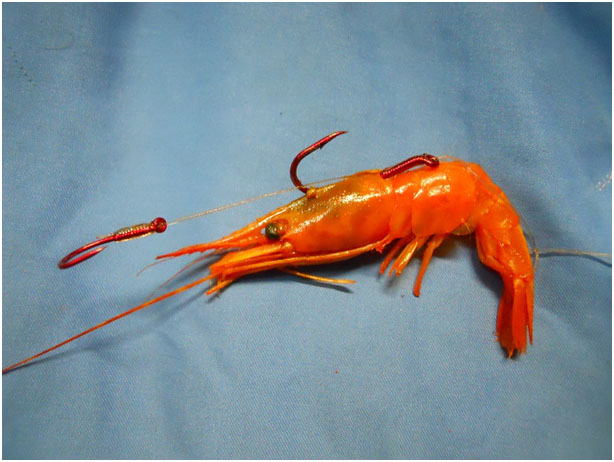
By neutral I simply mean colors that aren’t neon, radiant, or vibrant. This includes shrimp pink’s, peaches, whites, and that opaque and translucent look that looks like worn out egg skein (peach/white). Using small sand shrimp and very lightly cured medium sized tiger prawns that are coated with just Mike’s Gel Scent and sugar can be deadly in this situation also.

Here’s how I cure my tiger prawns for low water steelheading:
- 1 Bag raw medium-size tiger prawns
- Leave the shells on, but cut off 1/4 up from the tail end
- 1/4 Cup Orange Borax O’ Fire
- 1/2 Bottle Mikes Pink Gel Scent
- 1/4 Cup Sugar and Sprinkle salt on top.

Mix, mix, mix this all together by shaking the container gently until product is evenly distributed and then simply put the cured prawns into a fridge.You can even throw them into your boat on your drive out to the river and the prawns can be ready in less than 2 hours. Remove the shells and cut the prawns down the middle of the slit in their back or cut them in half into small chunks. Either the flap or the chunks will fish just fine but I prefer using the flap style because they bend and flex with the flow of the river giving them a more natural “free-flowing” appearance.

Over the past few weeks my boat has been on the Satsop, Wynoochee, Queets, Humptulips, and Hoh rivers. Call me a groupie, but I love to get around! Knowing each rivers positives and negatives gives a guy an advantage over just fishing one river and being limited to a small fishable area.

On the coast the Queets and Hoh rivers run through giant open gorges with classic gravel bar runs and giant boulder strewn stretches. One thing for certain that gives these rivers the “nod” in low water and that’s the fact that they are fed from grey clay cliffs!

These clay cliffs constantly bleed grey clay sediments into the river 24/7 giving the river the “carbon emerald green” appearance in ALL conditions. This carbon green look is IDEAL for low water conditions because it gives the fish a sense of security and they are more willing to continue their journey up higher into the systems. Fishing those 1-2 foot travel lanes can still produce in these systems and you’ll find me here more often then not in low water. Plus these rivers have naturally higher flows in terms of CFS than almost all of the others in our state so they fish better in low flows.

Below are some photos of the past 14 days in my driftboat. They are pictures of only some of the steelhead that have been caught in my boat, but each one was special in its own way. Steelheading is a lifestyle for me. It’s gotten into my blood and there’s no cure to get rid of it. Salmon season is just a time filler anymore and during spring, summer and fall I dream about those cold crisp wintery mornings when I finally get to hook those cold silvery steelhead once again.

Capturing the shot, sometimes we take 20-30 photos and only one works out

Wynoochee hatchery buck, this fish was caught by Daniel Hubbard and it was hooked way under a down tree. This fish was jumping into brush and we were able to pull it out from structure and get a solid net job

This enormous steelhead took over 225 yards of line at one point

This huge hatchery steelhead caught by John McCleery was just shy of the 20 pound mark

2ynoochee hen! this fish took red Borax O’ Fire Eggs!

Nothing like Limits in the fish box! Let the chrome shine!

A hatchery buck from the Wynoochee system just prior to release

14lb Wynoochee buck that fell to a yarn ball

My father with a beautiful hatchery buck that hit the Dr. Death K-13 Kwikfish

Spots for days

Limits by 9am!

John McCleery with a big buck caught at first light

Limits of huge hatchery steelhead that fell for backtrolled plugs

I swung by to take some photos of Duane Inglin and limits of hatchery steelhead

Rain or Shine – a true steelheader will fish in any conditions on any day just to feel that tug, see that float dissapear or the chance to capture the moment with a photo of the most elusive fish in the pacific northwest!

The release of a native steelhead very high on the Queets River last week.

A fine wild hen steelhead caught by fellow Outdoor Line “Young Gun” Lael Paul Johnson.

One of the many primitive launches on the Washington coastal rivers.

A hatchery hen with blue haze on her back, fresh as can be!

A customer with his first steelhead…and his second steelhead!

If steelheading is in your blood as much as it is mine please feel free to drop me a line to chat about your addiction or perhaps book a day of fishing with me on the Washington coast. Hope to see you out there and don’t be afraid to stop by and say hello!

Joseph Princen
Outdoor Line “Young Gun”
710 ESPN Seattle
www.theoutdoorline.com

(Joseph Princen operates Rainforest Wild Guide Service on the Southern Olympic Peninsula and he will be a regular contributor to the Outdoor Line. He can be reached at (253) 347-5300.)